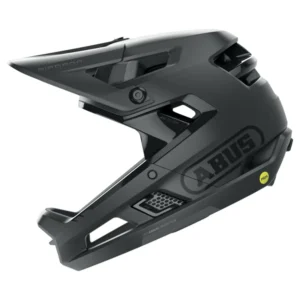
Choosing a full face helmet for your riding
A full face MTB helmet adds a chin bar around the jaw and lower face. It offers coverage that an open-face trail helmet does not, but full face designs still differ in their construction and intended use.
Start with the type of riding you do most often, then compare fit, ventilation, weight and certification.
Downhill and bike park helmets
For uplift days and downhill riding, check that the manufacturer specifies the helmet for that use. Review the venue or race rules too, particularly where a specific certification is required.
Do not assume every full face helmet meets the same standards. The model’s stated certification is more useful than its appearance or the name of the range.
Full face helmets for enduro
Enduro riding can involve lengthy climbs between demanding descents. Here, ventilation, helmet weight and comfort during pedalling become important buying considerations.
Fox describes the Proframe as a lightweight full face design for all-mountain and enduro riding. Compare individual Proframe versions carefully, as features and adjustment systems vary.
Fox, Abus and Smith
Our collection includes Fox Proframe models, Abus AirDrop and Targon helmets, and the Smith Mainline.
Use these ranges as starting points, then compare the exact helmets within your budget. Check the supplied padding, fastening system, ventilation and impact-management technology rather than assuming all models from one brand share the same features.
Sizing and cheek-pad fit
Use the size guide for the exact helmet and follow its fitting instructions. A full face helmet’s cheek pads contribute to the fit, so head circumference alone does not tell the whole story.
Check whether alternative pad thicknesses are included or available for that model. Try the helmet on where possible, and do not choose a larger size simply to make it easier to pull on.
Goggle compatibility
Check your helmet and goggles together before riding. The goggles should sit comfortably within the opening, with the strap positioned as the manufacturers recommend.
Peak adjustment and goggle clearance vary between models. Check compatibility rather than assuming any MTB goggles will fit equally well.
Understanding Mips
Selected full face helmets include Mips, which is designed to help reduce rotational motion transferred to the head in certain impacts.
Check the individual specification to establish which system is fitted. Mips, fit and certification answer different questions, so consider each when comparing helmets.
A full face helmet is the appropriate starting point for downhill riding. Choose a model the manufacturer specifies for that use, and check the certification required by your venue or event.
Yes. Some full face helmets are developed for rides that include climbing as well as descending. Compare ventilation, weight and fit, and check the manufacturer’s intended use.
Do not assume they are. Check the exact model’s stated certifications and compare them with the requirements of your bike park or race.
Follow the manufacturer’s fitting instructions, including guidance for the cheek pads, retention system and chin strap. It should feel secure without painful pressure points. Try different models where possible, as internal shapes vary.
No. Impact-management systems differ between models and versions. Check the individual product description rather than relying on the brand or range name.
There are full face models intended for younger riders. Choose according to the manufacturer’s size range and intended use, and check the fit carefully. Avoid buying an oversized helmet for a child to grow into.