
SPD-SLR Compatibility Explainer
Have you heard? After 23 years Shimano have updated the pedal and cleat interface of their much-loved road pedal system. Shimano says SPD-SLR delivers a lower stack height, faster engagement, lighter cleats and a more direct shoe-to-bike connection, but it also abandons the backwards compatibility that SPD-SL riders have enjoyed since 2003.
Watch our SPD-SLR compatibility explainer video.
Paris-Roubaix 2026 – the secret’s out.
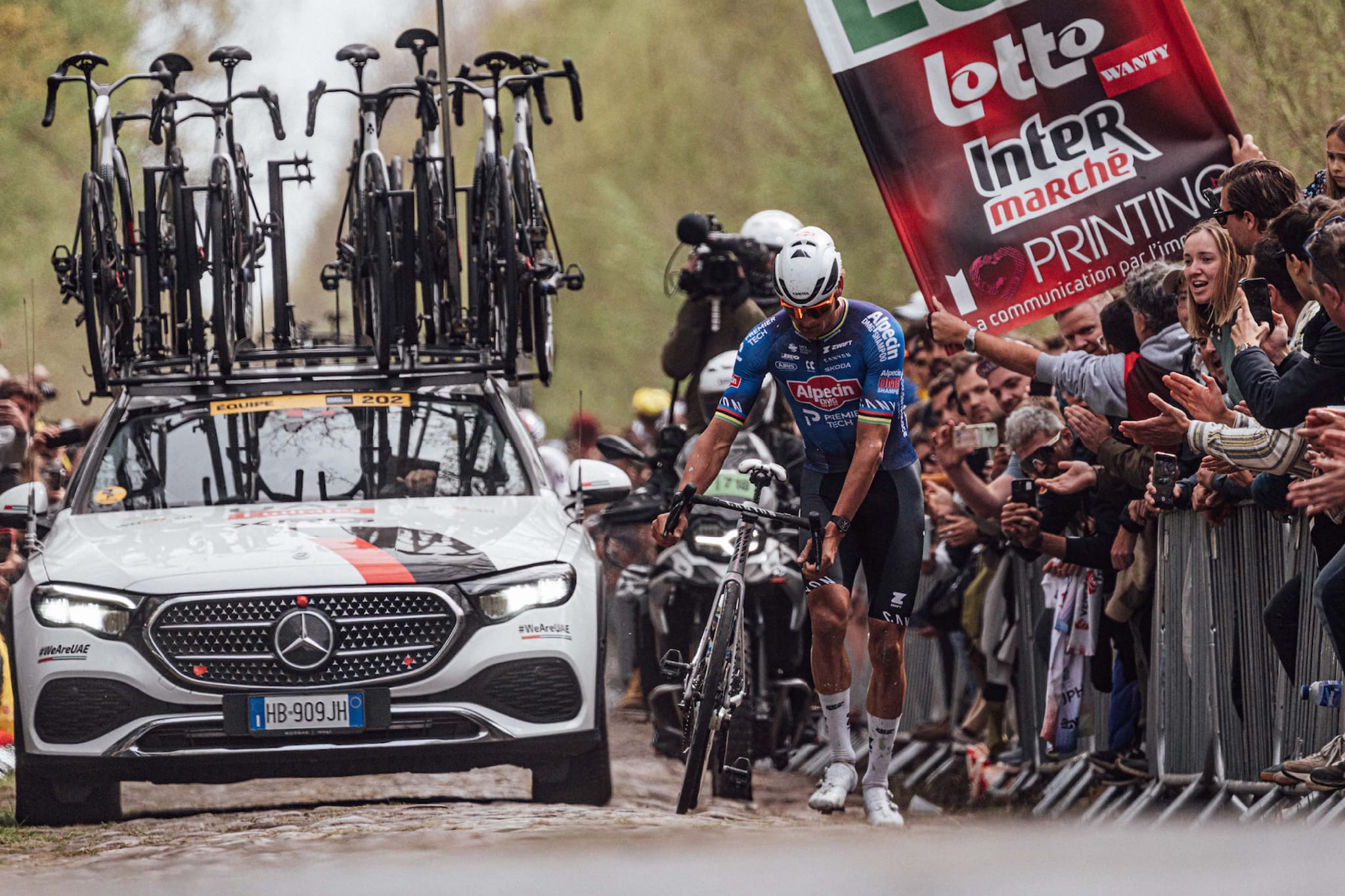
That lack of compatibility between the outgoing SPD-SL and the new SPD-SLR was inadvertently brought to everyone’s attention at this year’s edition of Paris-Roubaix, as Mathieu Van Der Poel punctured and swapped onto teammate Jasper Philipsen’s bike rather than wait for mechanical assistance from his team car. With Philipsen riding the Shimano SPD-SL pedals and Van Der Poel on the pre-release SPD-SLR pedals Mathieu couldn’t clip in and the frustration was clear for everyone to see.
Of course, what happened at Paris-Roubaix is an extreme example of that backwards compatibility; us mere mortal amateur cyclists don’t have the luxury of mid-race bike swaps so don’t need to worry, nevertheless when it’s time to switch out our current Shimano shoes, pedals or cleats that backwards compatibility is certainly going to be a consideration.
Evolution not revolution.
Shimano are confident that any potential confusion or frustration about the lack of compatibility is worth overcoming in the long run. So, what was wrong with SPD-SL? Let’s take a closer look at the spec of the new SPD-SLR and breakdown the differences between the two systems while we identify the benefits of the new SPD-SLR system.
Shimano admit there was nothing majorly wrong with the outgoing SPD-SL system, but they were keen to eliminate any unwanted movement between the pedal and the cleat for a more secure connected feeling between rider and bike. They haven’t completely reinvented their clipless pedals they’ve refined them while chasing marginal gains for cycling’s most important contact point.
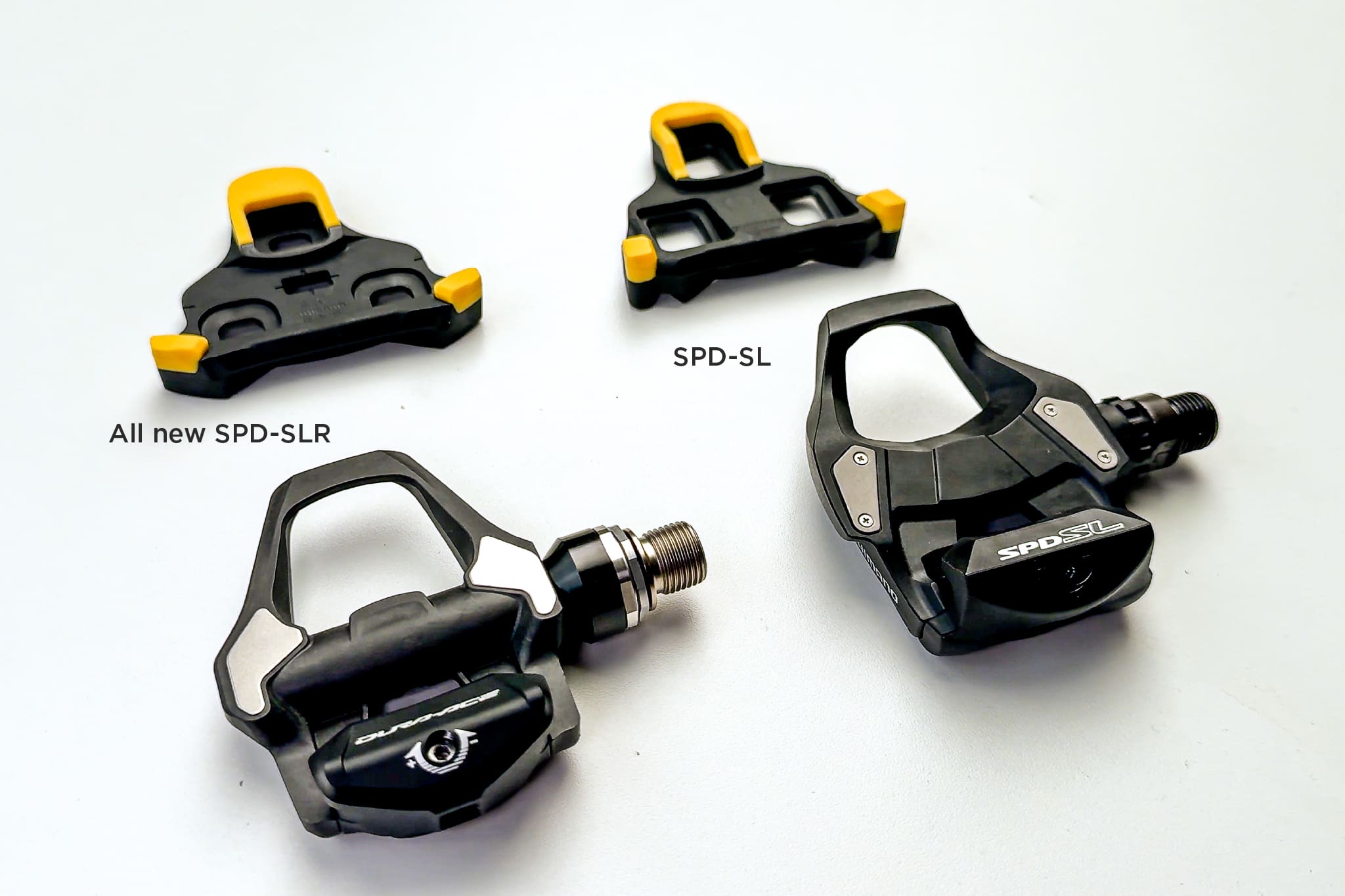
Four key changes to the new Shimano SPD-SLR pedals.
Lower stack height.
This is most definitely the headline feature, with Shimano claiming improved stability, control and power transfer. There’s a 2.3mm reduction in stack height from the pedal and cleat system making them around 16% lower than the previous Dura-Ace pedal system.
Faster engagement.
This is probably a factor which is most relevant to us amateur road cyclists and may well be a benefit everyday riders may notice most. There’s a wider catch zone and the engagement angle has been reduced from 15.5° to 10.5° making clipping in feel markedly easier with quicker engagement.
Lighter cleats.
The new SPD-SLR cleats are 16 grams lighter than the SPD-SL equivalent, reduced from 71g to 55 g demonstrating Shimano’s desire to optimise every detail of the pedal and cleat system. That weight saving is down to a thinner cleat with less stack and a simplified bolt configuration with the old washers removed.
Easier setup.
This is something that is often overlooked but anyone who has had to replace worn cleats knows the abject fear of fitting new ones to their shoes, second guessing themselves on whether they’ve got them set up in the same position as their old cleats. Those first few rides with new cleats are somewhat nerve racking as you wait to see if your knees are overly sensitive to any unwanted position changes. For the SPD-SLR have redesigned the alignment markings and improved the fit adjustment system.
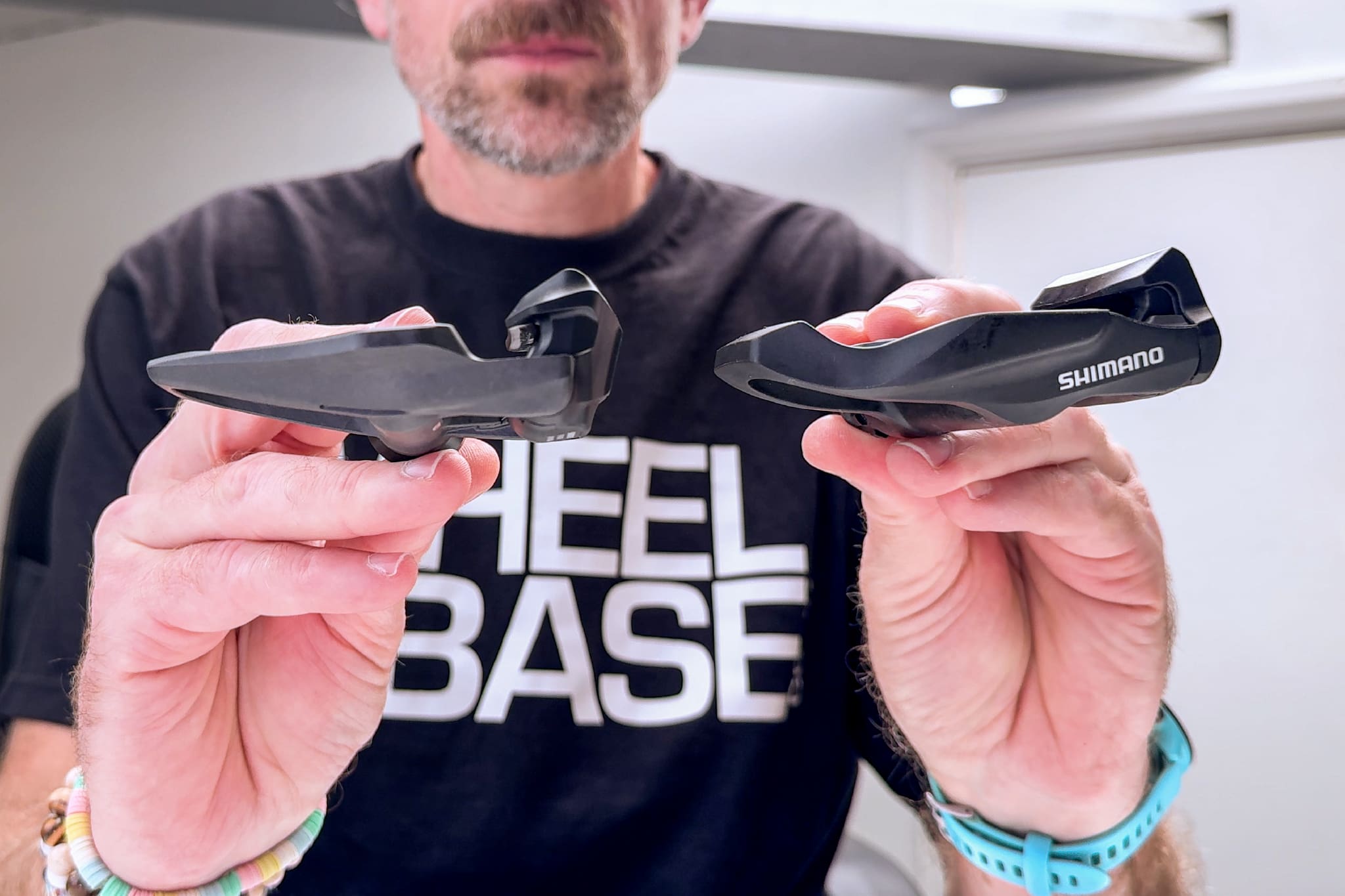
There’s another compatibility consideration.
One major watch out is how adjustable the new SPD-SLR cleats are with your current road cycling shoes. In an effort to lighten and slim down the new cleats Shimano have done away with the metal washers and removed the fore and aft adjustability, meaning if the bolt holes on your current road shoes are fixed then you’ll only be able to adjust the cleats from side to side, not fore and aft. Shimano road shoes do feature a moveable bolt hole configuration in their shoes so fore and aft adjustability is possible with the complete Shimano road shoe, pedal and cleat setup.
Alternatively, if you do have road shoes with fixed bolt holes and need fore and aft adjustability Shimano have created an after-market cleat which is compatible with the new SPD-SLR pedals that does feature fore and aft adjustability and metal washers. To accommodate this Shimano have had to make the cleat slightly thicker meaning the stack height will be slightly higher. This feels a bit like you’re back where you started with the previous SPD-SL configuration and we’d suggest maybe waiting until you’re ready to switch to a full Shimano road shoe, pedal and cleat setup.
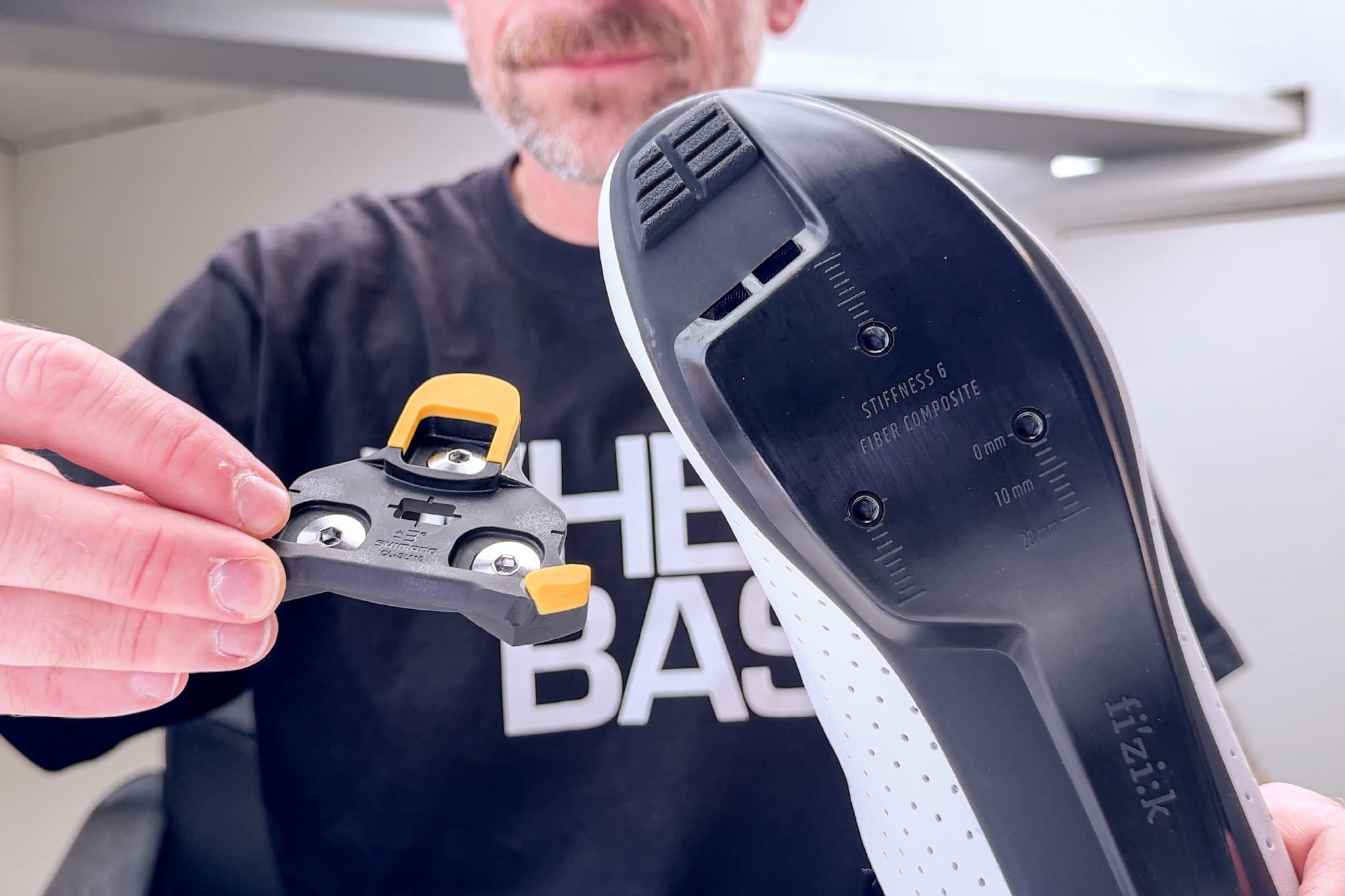
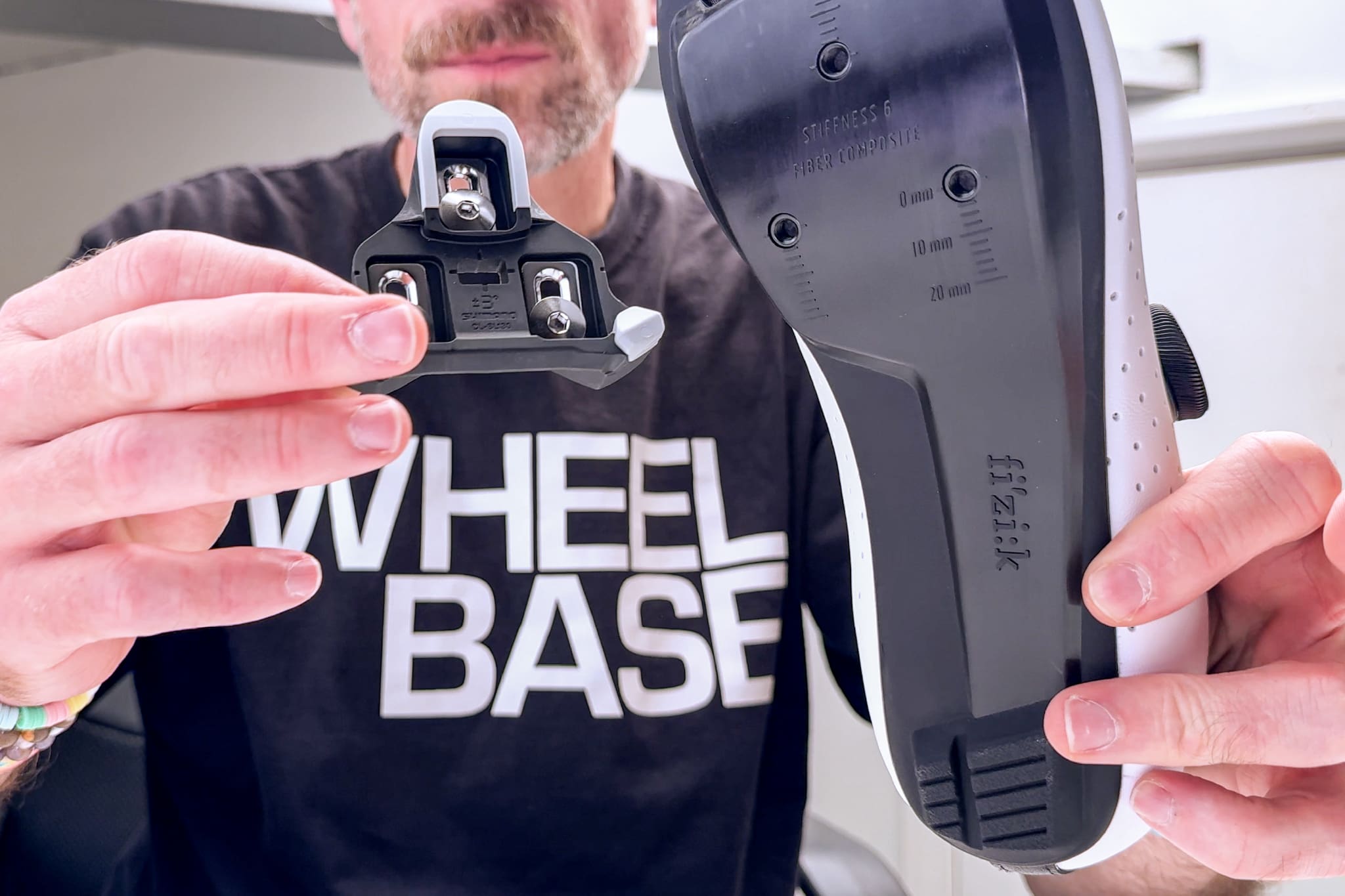
Should you update to the SPD-SLR system?
You can relax; your current system isn’t obsolete. Serious competitive road cyclists may see the benefits of the marginal gains we’ve highlighted and will be able to justify an immediate switch. Enthusiasts might want to upgrade the next time they are replacing their shoes and pedals. Existing SPD-SL users have less reason to rush to upgrade and can be assured that their current systems aren’t obsolete.
SPD-SLR isn’t revolutionary because it changes the way we ride. It’s significant because Shimano believes there’s still marginal performance gains to be found in a system that already has a huge presence in professional road cycling. Whether those gains justify abandoning twenty-three years of compatibility is a question us amateur road cyclists will have to answer ourselves.